How to Start a Drone Photography Side Hustle Using DJI Gear
A drone is one of the few pieces of gear that can pay for itself within a few client jobs. Here is a practical breakdown of how to turn DJI equipment into a real side income — from choosing the right hardware to landing your first paying gig.
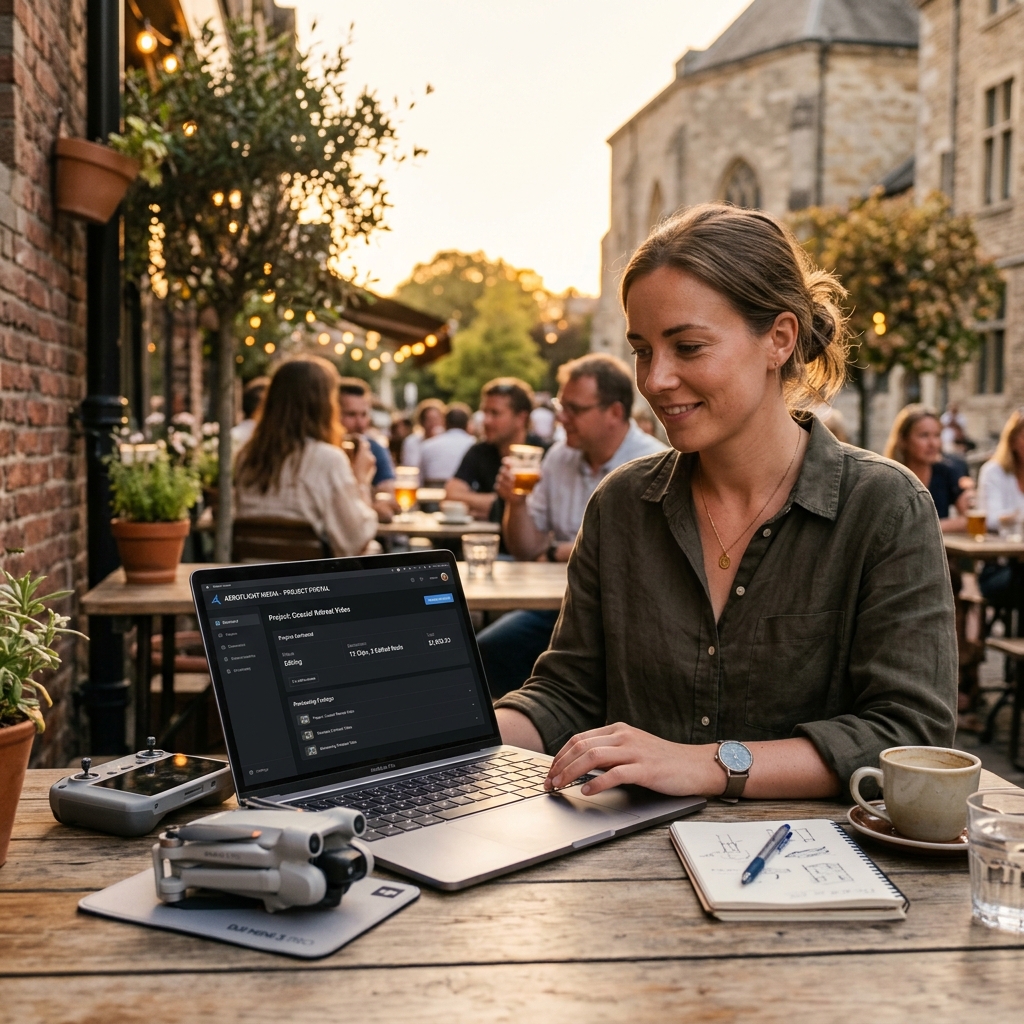
Most people buy a drone to film their own adventures. A smaller number realize, usually after the first few flights, that the footage they are producing is genuinely better than what local businesses, real estate agents, and event organizers are paying for.
That gap between professional demand and available local supply is exactly where a drone photography side hustle lives.
Why drone work is an unusually good side hustle model
Not every skill-based side hustle has strong local demand. Drone photography is different for a few reasons:
- The barrier to entry is meaningful but not extreme. Flying a modern DJI drone competently takes practice, but it is far more accessible than learning traditional aerial photography with manned aircraft.
- Local competition is often thin. Outside of major cities, the number of operators who can deliver clean, edited aerial footage on deadline is small. That scarcity has pricing power.
- The gear is multi-purpose. The same equipment that earns you money on client work also builds your own content library, improves your travel footage, and serves as a creative outlet.
- Project fees are real. Unlike many content-side gigs that pay per click or per follower, drone photography for clients pays per project — often $300 to $1,500 for a half-day shoot depending on your market and deliverable scope.
The model is simple: skill up, get licensed where required, build a small portfolio, and start with the clients already closest to you.
Choosing the right DJI gear for paid work
The drone you use for client work does not have to be the most expensive model available. In most commercial scenarios — real estate, small events, local tourism boards, and social content for businesses — what matters is image quality, reliability, and your ability to show up prepared.
The workhorse starting drone
The DJI Mini 5 Pro sits at an interesting crossroads. It stays under 249 grams, which simplifies regulatory compliance in many markets, and it shoots footage that is genuinely good enough for most commercial applications: real estate listings, short promotional videos, and brand content for social platforms.
Where this matters for client work:
- The omnidirectional obstacle avoidance means you can fly with more confidence in fence-lined properties, tree-heavy residential areas, and mixed urban environments where a client is watching.
- Native vertical video support matters as more clients request deliverables formatted for Instagram Reels and TikTok.
- Sub-249g compliance gives you more legal flexibility in locations where heavier drones require advance permits — useful when a client books you on short notice.
For operators who take on larger-scale commercial work — architecture, construction progress documentation, cinematic brand spots — the DJI Mavic 4 Pro offers the triple-lens system and larger sensor that justifies premium project rates. But this is a gear upgrade you earn into, not a starting point.
The ground camera that earns alongside the drone
Most clients want more than aerial footage alone. A real estate shoot, for example, typically needs interior walkthroughs, exterior establishing shots, and neighborhood context — not just overhead clips.
The Osmo Pocket 3 is a strong companion here. Its mechanical gimbal stabilization means handheld interior walkthroughs look polished without a dedicated gimbal rig, and the 1-inch sensor handles indoor lighting reasonably well. Adding a pocket camera to your service offering lets you charge for a more complete deliverable without dramatically increasing your gear weight or setup complexity.
Audio for video clients
If your packages include any talking-head interviews, event coverage, or narrated walkthroughs, audio quality becomes part of your professional credibility. The DJI Mic 3 pairs instantly with both the Osmo Pocket 3 and most smartphones, making it straightforward to capture clean dialogue without a separate audio recorder or complicated receiver setup.
The four client types worth starting with
Rather than trying to serve everyone, focus on the verticals where drone footage has the most obvious ROI for the buyer:
1. Real estate agents and brokerages Aerial photography for listings is well-established. Agents in most markets already expect it for premium properties. The ask is clear, the deliverable is defined (exterior aerials, neighborhood context, elevated shots), and repeat business is common if you deliver on time.
2. Small hospitality businesses Hotels, vacation rentals, glamping sites, and boutique resorts all need compelling visual content. A short aerial video showing the property and its surroundings converts better than ground photos alone, and many of these businesses have small marketing budgets but genuine intent to spend when the value is obvious.
3. Local government and tourism boards Parks departments, regional tourism organizations, and municipal marketing teams regularly commission aerial content for websites, social media, and promotional materials. They tend to have defined budgets, longer project timelines, and low creative friction — you get a brief and deliver against it.
4. Events and construction Event coverage (small festivals, markets, corporate outdoor events) and construction progress documentation (monthly site aerials for developers) both benefit from drone footage in ways that ground cameras cannot replicate. Construction documentation in particular is a recurring contract model — the same client site, monthly, for months or years.
What to charge when starting out
Pricing varies significantly by market and deliverable scope, but a reasonable framework for a new operator:
- Basic real estate aerial (5–10 edited photos): $150–$300
- Real estate aerial + ground walkthrough package: $350–$600
- Short promotional video (up to 90 seconds, edited): $500–$1,200
- Event coverage (2–3 hours, raw + highlight edit): $400–$800
- Construction site monthly documentation: $200–$500/visit
Do not underprice to get started. Underpricing attracts clients who will not pay fair rates later and sets expectations that are hard to reset. Price at the lower end of your market range and deliver reliably — that is what builds a referral pipeline.
Licensing: what you actually need to know
In the United States, operating a drone commercially requires FAA Part 107 certification. The exam covers airspace rules, weather effects on flight, emergency procedures, and regulatory knowledge. It is a written test that most people pass with two to four weeks of dedicated study.
The two most important things to know:
- You need Part 107 before you take money for drone work. Flying recreationally under the 249g exemption does not cover commercial operations.
- Insurance is worth buying early. Drone liability insurance for commercial operators typically costs $500–$1,000 per year. Some clients — particularly larger businesses, hotels, and government entities — will ask for a certificate of insurance before booking.
Other countries have their own equivalents. Check local aviation authority requirements before flying commercially in any market.
Building a portfolio when you have no clients yet
The fastest way to build a portfolio without client work is to find interesting local subjects and shoot them as personal projects:
- Landmark properties: Historic buildings, waterfront properties, scenic viewpoints, and architectural highlights make strong portfolio pieces.
- Event coverage for free: Offer to cover a local community event, a friend's outdoor wedding, or a charity function. Get permission, deliver edited clips, and use that footage as a genuine sample.
- Business outreach with samples: Film a local hotel, restaurant, or retail property on your own time, edit a short 30-second clip, and present it to the owner as a sample. Some will buy it on the spot. All of it becomes portfolio material.
The goal in the first 90 days is three strong, edited examples that clearly show what you deliver. That is enough to start taking paid inquiries seriously.
Where to get started with DJI gear
If you are starting from zero, the most practical entry point is a DJI Mini 5 Pro purchased directly from the official DJI USA store. Buying direct gives you full warranty coverage and the ability to add DJI Care Refresh — which provides replacement coverage for flyaway or crash incidents. For gear that is actively generating client revenue, that protection is worth the cost.
The DJI official store also consistently carries the full accessory ecosystem — extra batteries, ND filter sets, carrying cases, and the Osmo Pocket 3 — so you can build out the complete commercial kit in a single order.
The bottom line
A drone photography side hustle works because the demand is real, the local supply is often thin, and the entry cost is meaningful enough to keep casual competitors from flooding the market — but accessible enough that a serious person can get operational within a few months.
The gear is the smallest part of the equation. The bigger commitment is getting licensed, practicing consistently, and putting in the outreach effort to land the first few clients.
From there, the math changes quickly. A drone that costs $800 and earns $600 per client shoot pays itself back in two jobs. Everything after that is margin on a tool that also improves your own content every time you use it.